3 Website Misconceptions Hotel Owners Revealed

hotel website misconceptions

Excerpt – Most hotel websites fail because they explain instead of reassure. Guests come to decide, not explore. When websites build trust quickly, direct bookings rise and OTA dependence reduces.

TL;DR – What Hotel Owners Learn About Websites Only After Real Experience

Most hotel owners see their website as a requirement, not a revenue driver. Insights from Sourabh Baheti of Kasturi Orchid Hotel and Krishnendu B Parui of Gram Bangla Retreat reveal why this thinking fails. Guests do not visit websites to explore stories; they come to confirm trust, pricing comfort, and booking safety. When websites are outdated or treated as one-time projects, hesitation grows and guests return to OTAs.

Hotels that treat their website as a living business asset see a clear shift better guest quality, higher confidence, and stronger direct bookings without increasing marketing spend.

Introduction

For many hotel owners, a website starts as a necessity rather than a strategy. Something that needs to exist, not something expected to perform.

Hotel owners do not underestimate their property, but they often misunderstand the role their website plays in the booking decision.

The most valuable insights on this topic do not come from theory. They come from hotel owners who have seen the impact first-hand.

Conversations with Sourabh Baheti, Director of Kasturi Orchid Hotel, and Krishnendu B Parui, Founder of Gram Bangla Retreat, reveal three common misconceptions that many hoteliers hold until real operational experience changes their thinking.

Misconception 1: A Website Is a Cost, Not an Asset

This belief is deeply rooted across the hospitality industry.

For many independent hotels, the website is treated as a one-time expense. It is built, paid for, and then forgotten, while OTAs are expected to drive most of the bookings.

At Kasturi Orchid Hotel, this was also the initial mindset.

The website existed, but it was not actively working as part of the booking journey. Once the team started using the website deliberately with clear room details, updated images, and a simple direct enquiry flow guest behaviour changed.

Guests who discovered the hotel through OTAs began visiting the website before booking.

That shift is critical. When guests voluntarily check a hotel’s website, they are no longer browsing. They are validating trust, comparing confidence, and moving closer to a decision.

At that point, the website stops being a cost. It becomes a revenue-influencing asset.

Misconception 2: Once the Website Is Built, the Job Is Done

Many hotel websites quietly lose trust not because of poor design, but because they fall out of sync with reality.

Photos remain outdated. Facilities evolve on property, but not online. Policies change, yet the website does not reflect them. This gap creates hesitation.

As Sourabh Baheti explains, when the website lags behind the actual on-ground experience, guests begin to doubt what they are seeing. That doubt rarely results in a complaint. Instead, it results in delay, cross-checking, or a return to OTAs.

When the website accurately mirrors the real guest experience:

  • Trust improves
  • Enquiries become smoother
  • Guests arrive better informed and more confident

A hotel website is not a static deliverable. It is a living representation of the property. When it stops reflecting reality, it stops converting.

Misconception 3: OTA Listings Are Enough, a Strong Website Is Optional

OTAs bring visibility, and social media builds recall. Both play an important role. However, neither gives hotels full control over how guests perceive or decide.

According to Krishnendu B Parui, many hotel owners initially believe that a beautiful website will automatically drive bookings, or that OTA listings alone are sufficient. In practice, neither assumption holds true.

Hotels eventually notice a clear difference in guest quality.

Guests who come through the website:

  • Ask fewer basic questions
  • Understand the property better
  • Trust pricing more easily
  • Are easier to convert

This happens because the website allows the hotel to frame its own narrative instead of competing within a standardised OTA template.

OTAs simplify decisions for guests, but they limit control for hotels. A strong website restores that control and supports long-term business stability.

Why Most Hotel Websites Still Fail to Convert?

Across repeated website audits and session behaviour analysis, one truth stands out: guests do not explore hotel websites. They evaluate them.

They spend most of their time at the top of the page, quickly checking price comfort, visual honesty, reviews, and booking clarity. They are not reading brand stories or philosophy at this stage. They are deciding whether it feels safe to book directly.

When websites overload guests with information without guidance, confusion replaces confidence. Once confidence drops, guests leave.

OTAs win not because they look better, but because they reduce decision effort.

The Real Shift Hotel Owners Must Make

The core issue is not traffic, SEO, or marketing spend. It is mindset.

As long as a website is treated as a brochure, a design showcase, or a one-time project, it will continue to lose bookings to platforms that are designed purely for decision-making.

A hotel website has one primary role: to make booking directly feel like the safest and smartest option.

When hotel owners begin to see their website as a business asset rather than a technical requirement, everything changes. Content becomes clearer. Design supports action. Trust signals appear earlier. Direct bookings improve without increasing advertising spend.

Final Words

A hotel website is not built to explain everything. It is built to help guests decide.

Guests do not want more information. They want reassurance.
They do not want to explore. They want clarity.

The moment a website prioritises guest confidence over hotel explanation, direct bookings grow naturally. Until then, OTAs will continue to dominate not because they are better, but because they make decisions easier.

A strong hotel website should do the same.

First Impressions: The 5-Second Rule in Hotel Website Design

hotel website design

When a potential guest lands on a hotel website, the decision to stay or leave happens extremely fast. Research shows that users form an opinion about a website in just 5 seconds, which is faster than conscious thought. Within this timeframe, visitors decide whether the website feels trustworthy, relevant, and worth exploring further.

This concept is widely known as the 5 second rule in web design. It highlights how quickly users judge a website based on layout, clarity, visuals, and usability.

For hotels, these first seconds directly affect bookings. A website is not just a digital brochure. It is the first interaction with the guest and often replaces the front desk experience.

TL;DR – Why First Impressions Matter in Hotel UX?

Hotel websites are judged within seconds, and those early moments strongly influence booking decisions. Research shows that most first impressions are design driven, which makes UX design critical for hospitality brands. Guests quickly assess clarity, credibility, and ease of use before choosing to stay or leave.

A well structured layout, strong visual hierarchy, fast loading pages, and visible trust signals help users understand the hotel offering immediately. Visual elements improve comprehension and reduce hesitation, especially during the booking journey. When hotel websites prioritise usability and design clarity, they build trust faster, improve guest confidence, and increase the likelihood of direct bookings.

Why First Impressions Matter for Hotel Websites?

In hospitality, trust and comfort influence booking decisions. Studies show that 75 percent of users judge a company’s credibility based on website design alone. If the website looks outdated, slow, or confusing, users assume the hotel experience will be the same.

Hotel guests typically want answers immediately.

  • Where is the hotel located?
  • What type of experience does it offer?
  • Can I book this hotel easily and safely?

If these questions are not answered within a few seconds, users leave and move to another hotel website or an OTA.

UX Design and the 5 Second Rule

User experience design focuses on reducing effort and increasing clarity. In the first few seconds, users do not read content. They scan visual signals such as headlines, images, spacing, buttons, and navigation.

Good UX design ensures that – 

  • The hotel’s value is instantly clear
  • Navigation feels simple and familiar
  • The booking path is visible and easy

Research discussed by Mighty Fine Design confirms that users decide whether a website is useful almost immediately based on structure and visual clarity.

How Kripa Designs Hotel Websites for Instant Understanding

At Portico Webworks, UX Designer Kripa follows a user-first design approach that aligns directly with the 5 second rule. Her process is grounded in usability principles, behavioural design, and hospitality-specific user expectations.

Clear Above the Fold Structure

Kripa designs the first visible screen to communicate the hotel’s identity instantly. This includes

  • A clear headline that explains the hotel offering
  • High quality room or property visuals
  • A visible and actionable booking button

This ensures users understand what the hotel is and what to do next without scrolling.

Strong Visual Hierarchy

Visual hierarchy guides the eye naturally. Kripa prioritises content order so users see the most important information first. Headlines, imagery, and calls to action are placed intentionally to reduce confusion and hesitation.

Speed and Performance Focus

Page speed is critical for first impressions. Slow loading websites increase bounce rates and reduce trust. Kripa optimises image sizes, layout structure, and interaction elements to ensure fast load times, especially on mobile devices.

Trust Signals in Early View

Hotel guests need reassurance. Kripa places trust indicators such as

  • Guest reviews  
  • Awards or recognitions
  • Secure booking cues

These elements appear early on the page to establish credibility immediately.

Hotel UX Elements That Improve First Impressions

Based on UX research and hospitality behaviour patterns, the following elements are essential within the first 5 seconds –

  • Clear and benefit-driven headlines 
  • Simple navigation with familiar labels
  • High quality visuals that reflect the real experience
  • Visible booking actions
  • Clean spacing and readable typography

LinkedIn UX research discussions highlight that clarity and simplicity outperform complex designs when it comes to first impressions.

What Design Statistics Reveal About Guest Behaviour on Hotel Websites

In hotel website design, first impressions directly influence whether a visitor becomes a guest. Multiple studies confirm that 94 percent of first impressions are design related, which shows how strongly layout, structure, and visual clarity shape user perception. When a guest lands on a hotel website, they instantly judge the quality of the stay based on how the site looks and feels.

Design elements such as visual hierarchy, spacing, imagery, and readability help users understand the hotel offering quickly. A cluttered or confusing layout creates doubt, while a clean and structured design builds confidence within seconds.

Research also shows that 75 percent of users judge a company’s credibility based on its website design. For hotels, credibility is closely tied to safety, comfort, and reliability. If a website appears outdated or poorly organised, users often assume the same about the property and move on to competitors or OTAs.

Visual communication plays an equally important role. Studies reveal that people following instructions with both text and images perform 323 percent better than those using text alone. In a hotel website context, this means room images, icons, and visual cues help guests understand amenities, layouts, and booking steps faster, reducing hesitation and confusion.

Marketing leaders also recognise this impact. 65 percent of senior marketing executives believe visual assets are central to brand communication. For hotels, visuals do more than decorate a page. They set expectations, trigger emotions, and reinforce brand identity. Colour palettes, photography style, and iconography influence how luxurious, welcoming, or family friendly a hotel feels within the first few seconds.

Business Impact of Getting the First Impression Right

A strong first impression improves

  • Time spent on site
  • Direct booking rates
  • Brand trust
  • Guest confidence

Sources report that 72 percent of customers share positive experiences, while negative impressions spread faster and wider. A poor website experience can silently cost hotels bookings every day.

Conclusion

The 5 second rule is not a design trend. It is a behavioural reality. Hotel websites must communicate value, trust, and direction almost instantly. Through UX-led design decisions, performance optimisation, and hospitality-focused thinking, Kripa at Portico Webworks ensures hotel websites are understood within seconds, not minutes.

When first impressions are clear, confident, and user-friendly, guests are far more likely to stay, explore, and book directly.

How UX and Navigation Influence Booking Decisions on Hotel Websites

In today’s hospitality market, travellers compare dozens of hotels within minutes. Location, price, and amenities matter, but user experience (UX) and navigation often decide who gets the booking.

A hotel website is no longer just a digital brochure. It is a conversion engine. If the experience feels slow, confusing, or stressful, guests abandon it instantly, often booking with a competitor or an OTA instead.

This article explains how UX and navigation influence booking behaviour, what successful hotel websites do right, and where most hotels lose revenue without realising it.

TL;DR: Why UX and Navigation Decide Hotel Bookings?

User experience and navigation play a critical role in hotel booking decisions. Guests expect a fast, clear, and stress-free journey from search to confirmation. When a hotel website makes it easy to check availability, compare rooms, and understand pricing, guests feel confident and book faster. Clear navigation keeps the booking action visible, while smart UX reduces confusion and choice overload.

On the other hand, slow pages, complex forms, and unclear layouts create friction and lead to abandonment. In today’s competitive hospitality market, intuitive UX and simple navigation are not design extras, they are essential tools for increasing direct bookings and revenue.

1. Make Booking Simple and Stress-Free

Hotel bookings are emotional decisions. Guests want reassurance, clarity, and ease, especially when money and travel plans are involved.

A stress-free booking experience means:

  • Clear room options without overload
  • Transparent pricing with no surprises
  • Minimal form fields
  • Predictable steps

When users land on a hotel website, they subconsciously ask:

“How quickly can I check availability and feel confident enough to book?”

If the answer is not immediate, friction sets in.

Good UX reduces mental effort.
Instead of forcing guests to think, compare, and guess, the interface guides them gently toward a decision.

Key UX elements that reduce stress:

  • A visible “Book Now” or “Check Availability” CTA
  • Clear date selection
  • Simple room comparison
  • Trust signals near pricing (reviews, policies, guarantees)

The smoother the experience feels, the more likely users are to complete the booking.

2. Designing for Faster Booking Decisions

Guests do not want to “explore” endlessly. They want to decide quickly and confidently.

High-converting hotel websites are designed for decision velocity.

This means:

  • Showing the most popular room first
  • Highlighting best value or recommended options
  • Using short, scannable descriptions
  • Displaying key amenities near room prices

UX design should reduce choice paralysis.

Instead of asking users to evaluate everything, smart design:

  • Pre-selects sensible defaults
  • Uses visual hierarchy to guide attention
  • Removes unnecessary steps between search and checkout

Speed is not only technical, it is cognitive.

When a guest can understand:

  • What they’re booking
  • Why it’s right for them
  • What it costs

within seconds, the likelihood of booking increases dramatically.

3. Smart UX That Drives Direct Revenue

Every UX decision either:

  • Pushes users closer to booking, or
  • Quietly sends them away

Smart UX is not about aesthetics alone—it is about revenue alignment.

Revenue-driven UX focuses on:

  • Direct bookings over OTAs
  • Upsell visibility without pressure
  • Clear value differentiation

Examples of smart UX for hotel websites:

  • Showing “Best Price Guaranteed” near booking buttons
  • Highlighting benefits of booking direct (free breakfast, late checkout)
  • Displaying limited-time messages ethically (without fake urgency)

When UX supports business goals without feeling manipulative, guests trust the brand more—and trust leads to conversions.

Good UX earns money quietly.
Bad UX leaks revenue invisibly.

4. Navigation That Turns Visitors into Guests

Navigation is not about menus—it is about direction.

Hotel website navigation should answer three questions immediately:

  1. Where am I?
  2. What can I do here?
  3. How do I book?

Common navigation mistakes include:

  • Too many menu items
  • Vague labels like “Discover” or “Experience”
  • Booking CTAs buried inside sub-menus

Effective navigation:

  • Keeps the booking action visible at all times
  • Groups information logically (Rooms, Dining, Location, Offers)
  • Avoids overwhelming users with secondary pages

Navigation should guide users toward:

Availability → Room Selection → Booking → Confirmation

When navigation works well, users don’t notice it.
When it fails, users leave.

5. A Clear, Smooth Path from Search to Stay

The booking journey starts long before the payment page.

From the moment a guest arrives, often via Google search or Maps, the path should feel continuous and logical.

A smooth path includes:

  • Landing pages aligned with search intent (location, occasion, dates)
  • Immediate availability visibility
  • Consistent design across pages
  • No sudden layout or pricing changes mid-journey

Breaks in the journey cause doubt.

Examples of journey breaks:

  • Redirects to outdated booking engines
  • Different design styles between pages
  • Missing information during checkout
  • Unexpected fees revealed late

Every break forces the guest to reassess the decision, and reassessment often leads to abandonment.

A clear UX path removes doubt and maintains momentum.

6. UX Mistakes That Cost You Bookings

Many hotels lose bookings not because of price or quality, but because of avoidable UX errors.

High-impact UX mistakes include:

  • Slow loading pages on mobile
  • Complex booking forms
  • Poor room photos or missing visuals
  • No reassurance around cancellation policies
  • Overloading users with too much text
  • Hidden contact or support information

Another major mistake is designing for the hotel, not the guest.

Internal language, operational logic, and brand ego often replace guest-centric thinking. UX should always reflect how guests think—not how hotels operate internally.

Fixing small UX issues can result in immediate conversion improvements, often without increasing traffic or ad spend.

Final Thought Says UX Is Silent Salesmanship

UX and navigation do not shout.
They guide, reassure, and simplify.

For hotel websites, great UX:

  • Builds trust
  • Reduces friction
  • Speeds up decisions
  • Increases direct bookings

In an industry where margins matter and competition is fierce, UX is not a design choice, it is a revenue strategy.

Hotels that invest in clear navigation and guest-first UX don’t just look better online.
They book better.

The tech stack we use on every hotel website we build

Hotel website tech stack represented as stacked building blocks in terracotta, ochre and sienna tones

Summary: Every hotel website Portico builds runs on a deliberate hotel website tech stack — WordPress as the foundation, GeneratePress and GenerateBlocks Pro as the page building framework, Hostinger for hosting, RankMath Pro for SEO, and BugSnag for real-time monitoring. Every tool is the full paid professional version. This article explains each choice, the testing behind it, and why it matters for your hotel’s website performance.


The full hotel website tech stack we use

Additional tools run underneath, but these are the ones that directly contributes your hotel’s online performance.

ToolWhat it does
WordPressThe platform your website runs on
GeneratePress and GenerateBlocks ProPage building framework
HostingerFast, reliable hosting
LiteSpeed CachePre-loads pages for instant delivery
SSL certificatePCI DSS compliant security, included with Hostinger
RankMath ProSEO so guests find you on Google
BugSnagReal-time performance monitoring

Every tool in this stack is the full paid professional version. Every tool is widely documented and supported globally. Any competent WordPress developer can work with all of them.

Why I chose this stack

I have been writing code since 2020. Before that, I spent 13 years working inside hotels — across sales, revenue management, and pre-opening consulting. That combination gives me a specific lens when choosing tools: I do not pick what I am comfortable with. I pick what is right for the purpose.

I know Python, React, and Vue.js. Zarnik, my supply chain platform for hotels, runs entirely on Nuxt.js. React and Vue give you complete flexibility and freedom as a developer. But that flexibility comes with significant development cost, long build timelines, and ongoing maintenance overhead that is simply unnecessary for a hotel website.

A hotel website has one job: get guests to book directly. It does not need a custom-built front-end framework. It needs speed, reliability, SEO, and monitoring. WordPress with the right stack delivers all four better than any custom-built alternative at a fraction of the cost and time.

Every tool in this stack was tested before it was chosen. Not assumed — tested.

It starts with WordPress

Every hotel website we build runs on WordPress. Not because it is the default — because it is the right choice. I have written about this in detail in an article earlier, so I will not repeat the full argument here.

WordPress powers over 40% of the internet. It is open, it is yours completely, and any developer anywhere in the world can maintain it.

That last part matters more than most people realise. Your website should never be held hostage by the agency that built it.

Why the hotel website tech stack starts with the right page building framework

When I chose which page building framework to build the Portico stack on, I had one condition: it had to be fast.

A hotel website that loads slowly loses bookings. Not “might lose” — loses. Guests do not wait. They move to the next result.

We do not buy pre-built hotel themes from marketplaces. Every hotel website we build is custom designed to match your property, your brand, and your guests. This is done on top of WordPress plugins – GeneratePress Pro and GenerateBlocks Pro

Before committing to GeneratePress and GenerateBlocks Pro, we ran direct performance tests against Elementor, the most widely used WordPress page builder. A page built on Elementor scored between 60 and 65 on Google PageSpeed. The same page built on GeneratePress scored between 90 and 95. That is not a marginal difference — that is the difference between a website that ranks and converts and one that does not.

GeneratePress gives us a lean, ultra-fast foundation. The core framework sits under 10kb. Most marketplace themes exceed 1MB and carry that weight on every page your guests load. GenerateBlocks Pro lets us build every section of your website visually without writing unnecessary code underneath.

We use the full paid professional versions of both. Not trial versions, not free tiers. The complete toolset, because that is what a hotel website needs to perform.

Hostinger: reliable hosting with SSL included

Your website lives on a server — a computer running continuously in a data centre that stores your website and delivers it to anyone who visits. The quality of that server directly affects how fast your website loads and how reliably it stays online.

We host every client website on Hostinger, running on LiteSpeed servers with NVMe storage. LiteSpeed is the server software that handles visitor requests — it is significantly faster than what most hosting companies use by default. NVMe storage is the storage technology underneath — it reads and writes data faster than standard hosting storages, which means your pages reach guests sooner.

This combination consistently delivers sub-2-second load times. That means your website appears on a guest’s screen in under 2 seconds. Most guests abandon a website that takes longer than 3 seconds to load.

SSL is included with every Hostinger plan. SSL is the technology behind the padlock guests see in their browser — the signal that your website is secure and their data is safe. The SSL on every Portico website is PCI DSS compliant with 256-bit encryption, the industry standard for data protection.

LiteSpeed Cache: because fast hosting still needs fast caching

LiteSpeed Cache is a performance tool that works directly with the LiteSpeed server (which Hostinger already is). It pre-loads your pages so they are ready the moment a guest arrives — the same way a hotel pre-sets a room before check-in rather than making the guest wait while it is prepared.

Your website does not make guests wait.

RankMath Pro: so guests find you on Google and ChatGPT

A well-designed hotel website that nobody finds is a wasted investment.

RankMath Pro is an SEO plugin — SEO stands for Search Engine Optimisation, which is the work that helps your hotel appear when someone searches Google for accommodation in your area. RankMath Pro handles everything Google needs to understand, trust, and rank your website.

Schema markup is one of RankMath’s most important features. Schema markup is a piece of code that tells Google exactly what your website is — a hotel, with real rooms, real rates, and a real location. Without it, Google treats your website like any other page on the internet. With it, Google understands your property and displays it with star ratings, price ranges, and location information directly in search results.

RankMath Pro also handles on-page SEO scoring for every page and every room type.

We use the Pro version. It gives us advanced schema, keyword tracking, and the full suite of on-page controls. The free version covers 60% of what a hotel website needs for SEO. We are not interested in 60%.

BugSnag: hotel website performance monitoring that never sleeps

Most clients never see this tool. That is exactly the point.

BugSnag is a performance monitoring tool. It watches your website continuously in the background, looking for errors — broken pages, failed scripts, anything that stops working the way it should. When BugSnag catches an issue, our team gets alerted and fixes it instantly, before guests encounter it.

Most hotel websites run with no monitoring at all. An error can sit undetected for days while guests hit dead pages and leave. We monitor continuously and act immediately. Your website stays healthy without you ever having to think about it.

Why are we telling you this?

Most agencies do not share this information.

They build your site, hand it over, and you never know what runs it, who maintains the licenses, or what happens when something breaks.

You should know exactly what powers your website. Not because it changes how guests experience your property — they will never think about it. But because it is your website, and you have every right to know what is inside it.

If you want to see how your current site compares, start with a free audit.

Request free audit

Trademark disclaimer

The WordPress® trademark is the intellectual property of the WordPress Foundation. The GeneratePress® trademark is the intellectual property of Tom Usborne. The RankMath® trademark is the intellectual property of RankMath SEO. The BugSnag® trademark is the intellectual property of SmartBear Software. The Hostinger® trademark is the intellectual property of Hostinger International Ltd. Uses of the WordPress®, GeneratePress®, RankMath®, BugSnag®, and Hostinger® names on this website are for identification purposes only and do not imply an endorsement by their respective trademark owners. Portico Webworks is not endorsed by, owned by, or affiliated with any of the above trademark holders.

Why WordPress is still the right CMS for hotel websites in 2026

Why WordPress is still the right CMS for hotel websites in 2026

Summary: At Portico Webworks, we believe, WordPress is the top choice of CMS for hotel website even in 2026 due to its rapid SEO adaptability via plugins, user-friendly content management for hotel staff, and cost-effective scalability. Unlike closed systems or complex custom frameworks, WordPress provides the flexibility and control hotels need to stay competitive online.

When we were starting to building Portico Webworks, one of the first big questions I had to answer was simple: should we build hotel websites on WordPress, or should we use newer tools like Webflow and Framer? It’s a question many people ask, especially with all the talk about quick-build sites and AI. This article will lay out why, for now, WordPress is our go-to choice for hotels. And to be clear, we haven’t taken an oath to only use WordPress. If tomorrow a new CMS, a custom solution, or even AI tools better suit our clients’ needs, we’ll shift. But today, for building effective hotel websites on WordPress, it delivers.

The internet changes fast

Lots of new tools promise to get a website up in minutes. They look appealing, but our experience shows these quick-build tools often have hidden downsides. This is especially true when it comes to technical SEO. Think of technical SEO as making sure your website speaks clearly to search engines like Google. It helps Google understand what your hotel offers so it can show your site to the right people at the right time, which is vital for any hotel websites on WordPress.

Why other website builders (like Framer and Webflow) can fall short for hotel websites

Tools like Framer and Webflow are great for making beautiful websites quickly. They let designers create stunning pages without needing to write complex code. But here’s the thing: Google’s rules for finding and ranking websites are always changing. What worked last year might not work this year. Keeping up with these changes is absolutely crucial if you want your hotel website to show up high in search results.

Imagine Google constantly updating its rulebook for how to find the best hotels online. If your hotel website is built on a closed system like Webflow or Framer, it’s like having a custom-made car that only the original builder can fix. When Google changes a rule, you have to wait for that builder to update their entire system, which can take a very long time—sometimes over a year. From what we’ve seen, during that waiting period, your hotel website could be losing valuable visibility in search results.

Here’s a quick look at how Google’s rules have changed over the years, and why keeping up is so important for your hotel’s online success:

YearWhat Google started looking forWhy it matters for your hotel
2016Mobile-friendly websites firstIf your site didn’t look good on phones, you lost a lot of visitors.
2017Secure websites (HTTPS)Websites without a secure connection (the little padlock in the browser) scared guests away.
2018Fast-loading websitesSlow booking pages meant people left before booking.
2019Understanding what people really meanGoogle got smarter at understanding natural questions, like “boutique hotel with pool” instead of just keywords.
2020Rich information snippetsHotels that used special codes for FAQs or reviews stood out more in search results.
2021Good user experience (Core Web Vitals)Websites that jumped around or were hard to use while loading got penalized.
2022Helpful, human-written contentGoogle started ignoring websites filled with computer-generated spam.
2023Real-world experience (EEAT)Real guest reviews and expert authors became important for ranking.
2024AI summaries in search (SGE / AI overviews)Being mentioned by Google’s AI summaries became more important than just being the first link.
2025Optimizing for AI (GEO)Websites needed to be structured so AI could easily understand and recommend specific details, like room types.
2026Hotel’s overall reputation (entity authority)Google now looks at your hotel’s reputation everywhere online (social media, maps, reviews) as a technical signal.

With WordPress, our team sees a different story. WordPress has a massive global community of developers who create add-ons called plugins and themes. These are like special tools or outfits for your website. When Google announces a new rule, companies that make these plugins and themes quickly update them, often within weeks. This means your hotel website on WordPress can adapt much faster to Google’s changes. While we at Portico Webworks don’t rely 100% on these plugins, they give us a strong foundation and more control to handle SEO effectively. Our goal is to keep our clients’ hotel websites current with the latest SEO trends, and WordPress makes that much easier.

Why your hotel needs a good blog (and how WordPress makes it easy)

From our experience working with hotels, we know that when people plan a trip, they often look for more than just room prices. They want to know about the area, local events, or even the hotel’s unique story. A blog is a perfect way for your hotel to share this valuable information. It builds trust and shows off your hotel’s personality, which is incredibly important when potential guests are deciding where to book. This is a key feature for successful hotel websites on WordPress.

Some website builders, like Webflow, are great for design but often fall short when it comes to blogging. They can make it tough for someone like a hotel manager, who isn’t a tech expert, to simply write and publish a new article. WordPress, on the other hand, is known for its easy-to-use content management system. If you can write an email, you can easily write a blog post on WordPress. This lets your hotel staff share news, local tips, or special offers, keeping your hotel website fresh and engaging for potential guests.

The problem with websites built entirely by AI

AI tools for website generation are certainly innovative. However, based on our analysis, these platforms often have similar drawbacks to closed no-code systems, especially concerning SEO and controlling your content. AI-generated websites frequently lack a strong backend system for managing content, which limits your control and makes it hard to apply detailed SEO strategies. Plus, blogging features are often missing or very basic, which hurts a hotel’s ability to build authority and connect with its audience through rich, informative content. This is another reason why we prefer building hotel websites on WordPress.

Why we don’t typically build hotel websites with React or Vue

For some projects, modern JavaScript frameworks like React or Vue are excellent choices. They allow for highly dynamic, single-page applications (SPAs) that can feel incredibly fast and responsive. However, for most hotel websites, we find that the benefits don’t outweigh the complexities and potential drawbacks.

Building a site with React or Vue from scratch means a much longer development time and higher costs. These frameworks require specialized developers, and ongoing maintenance can be more involved. More importantly, SPAs can sometimes present challenges for search engine crawlers, making SEO optimization more complex than with a traditional server-rendered site. While these issues can be overcome, it often requires additional effort and technical solutions that add to the project’s overhead.

For a hotel website, the primary goals are typically strong SEO, easy content management for non-technical staff, and reliable performance. WordPress, as a mature CMS, delivers on these fronts with a proven track record, a vast ecosystem of tools, and a simpler workflow for content updates. While React or Vue might be considered for highly interactive booking portals or very specific web applications, for the core marketing and informational hotel website, WordPress usually offers a more efficient and effective solution.

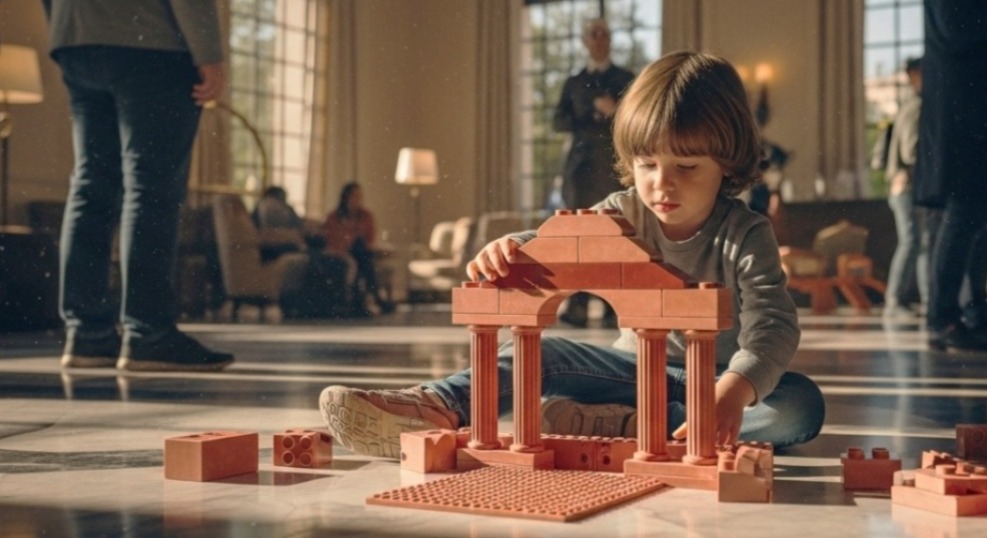
Why WordPress is like a super-powered LEGO set for your hotel website

Imagine building a really cool hotel. You could buy a pre-made, fancy toy hotel that looks great, but you can’t change anything inside. If you want a bigger pool or a new restaurant, you’re stuck. That’s a bit like using some of those other website builders—they look awesome, but changing things later can be tricky.

Now, imagine building your hotel with a giant box of LEGOs. You can build anything you want! If you need a bigger pool, you just add more LEGOs. If Google (the big boss of finding websites) says, “Hey, hotels need a special secret door for robots to find them better!”—with LEGOs (WordPress), someone quickly makes a new special door piece (a plugin), and you just snap it on. Easy peasy!

With the pre-made toy hotel, you’d have to wait for the toy company to make a whole new hotel model with that secret door, and that could take a super long time. While you’re waiting, other hotels with LEGO websites are already getting found by all the robots!

WordPress is like that LEGO set. It lets you build exactly what your hotel needs, and when Google changes the rules for finding websites, you can quickly add new pieces (plugins) to keep up. Plus, it’s super easy for your hotel manager to write about yummy breakfast specials or fun local events, just like writing a simple email. Those other fancy builders make it harder for regular people to write stuff, which means your hotel might miss out on telling its story.

Even with new AI tools that build websites super fast, it’s like they give you a cool picture of a LEGO castle, but you can’t actually play with it or change it much. WordPress gives you the actual LEGOs, so you’re always in charge of your amazing hotel website!

The real benefits of WordPress for your hotel

From our professional viewpoint at Portico Webworks, choosing WordPress for your hotel website in 2026 offers several big advantages:

  • Always up-to-date: Because so many people use and work on WordPress, it’s constantly being improved and adapted to new internet trends and Google’s rules much faster than closed systems. This means your hotel website stays relevant and visible, a key factor in online success.
  • You’re in control: With WordPress, you own your website and all its content. You’re not tied to one company, which gives you the freedom to make changes, add features, or switch developers whenever you need to. This level of control is invaluable for long-term digital strategy.
  • Grows with your hotel: Whether you have a small boutique hotel or a large chain, WordPress can handle it. It can start simple and grow as your business grows, without needing to rebuild everything from scratch. This scalability is a testament to its robust architecture.
  • Smart spending: While there are costs for setting up and maintaining any website, WordPress’s open-source nature often means more flexible and affordable options for getting exactly what your hotel needs, offering excellent value.

In short, WordPress helps your hotel succeed online by giving you the tools and freedom to adapt, control, and grow. It lets you focus on what you do best—providing a great experience for your guests—while your hotel website works hard to bring them in.

Conclusion: Why WordPress is still the best CMS for hotel websites

In 2026, the online world for hotels is defined by constant change in how search engines work and the undeniable need for fresh, interesting content. While quick-build website tools might seem appealing at first, our experience shows they often struggle to keep up with these crucial changes. AI-generated websites, while innovative, frequently don’t provide the necessary control over your content or how your site performs in search.

WordPress, with its flexible design, vast library of helpful tools (plugins), and easy-to-use system for managing content, remains the superior choice for hotel websites. It allows hotels to quickly adjust to new search rules, maintain full control of their online presence, and foster authentic connections with guests through engaging stories and information. For Portico Webworks, building hotel websites on WordPress is not just about choosing a platform; it’s about providing our hotel clients with a strong, future-proof foundation for enduring online visibility and success.

The story behind building a hotel website agency

Azhar Umar founder of Portico Webworks hotel website agency with mockup showing broken hotel website problems he solved

I’ve been working as a hotel consultant for a few years now. In every project I take up, the website is always a total mess.

The real issue is that it’s so hard to find a proper hotel website agency. Every time, I’m forced to work with generic agencies who build websites for schools one day and shops the next—they just don’t understand how a hotel works.

Honestly, it has reached a point where I feel embarrassed to show these websites to anyone. I don’t even want to tell people the work was done under my supervision because the quality is just not there.

The problem I kept running into

Here’s what happens every time I talk to a web agency.

I tell them we need a website for this hotel. They say sure, just send us the sitemap and content, and they’ll build it for me.

That doesn’t make sense to me.

To me, the sitemap isn’t just a list of pages. It’s about deciding how guests move through the website, where they go first, what convinces them to book. That’s the actual job I’m paying them to do.

But every agency asks for the same thing. Doesn’t matter if they charge ₹50,000 or ₹5 lakhs. They all want the sitemap upfront. Plus the content. Plus which images to use. Plus the page structure.

At that point, what am I even paying them for? To copy and paste my work into WordPress?

When I finally got fed up

The breaking point came during my Welnez project, a naturopathy retreat I was consulting for in Kerala.

I spoke to five different web agencies. Not small shops. These were the agencies people kept recommending as the best ones in the state.

Same problem with every single one.

I would have to create the sitemap myself. I would have to write the content or spend hours fixing what they wrote. I would have to tell them which images to pick and why. I would have to explain what information guests need before they’ll actually book directly instead of going to MakeMyTrip or Booking.com.

That’s when it hit me. No matter which agency I hire, the hotel team and I will end up doing most of the strategic work anyway.

So what’s the point of hiring them?

Why hotel websites keep failing

These agencies don’t specialize. Today they’re building a website for a restaurant. Tomorrow it’s a school. Next week it’s a hotel. Then an online store.

They’re not hotel website experts. They’re generalists who know how to use WordPress and buy templates.

They don’t understand hospitality-specific challenges. Things like what makes a guest trust your website enough to book directly. Or why guests compare your site with OTA listings before deciding. Or how people actually browse hotel websites on their phones. Or what conversion really means for the hospitality industry. It’s not just putting a Book Now button somewhere.

To them, a hotel website just means nice photos and a booking form.

They’ve never run a hotel. They’ve never dealt with OTA commissions eating into your revenue. They’ve never watched guests leave your beautiful website to book on Booking.com because something didn’t feel trustworthy enough.

Why I’m building a hotel website agency

That’s why I started building Portico Webworks.

It’s the hotel website agency I kept trying to hire but could never find.

We only work with hotels. That’s it. No restaurants, no schools, no e-commerce stores. Just hotels.

We don’t ask you to create the sitemap, write the content, or decide what goes where. That’s our job. You give us access to your property, we interview you about what makes it special, and we deliver a complete website built to convert browsers into direct bookers. You review and approve, not create and hand over.

We understand the hospitality industry because I’ve lived it. I’ve run hotel operations. I’ve dealt with OTAs. I’ve seen what works and what doesn’t when it comes to direct bookings.

I got tired of doing the agency’s job for them and still having to pay their bill.

If this sounds familiar

If you’ve ever felt this same frustration, you’re not alone.

If you’ve been stuck between expensive agencies who don’t understand hotels and cheap agencies who just use the same generic template for everyone, that’s exactly why I’m building this hotel website agency.

Hotel websites shouldn’t push guests to OTAs. They should convert browsers into direct bookers.

That’s what Portico Webworks does. And that’s why we exist.