
What hotel websites taught me about above-the-fold

What hotel websites taught me about above-the-fold

Why this one section quietly decides trust, scroll, and direct bookings

Summary: Above-the-fold plays a decisive role in hotel websites because most users arrive with low trust and high intent. Unlike well-known brands, smaller hotels must quickly establish credibility through clear visuals, a strong headline, and immediate booking cues. This section acts as a quick evaluation zone where users check relevance, pricing, availability, and overall vibe before deciding to scroll. Poor hierarchy, missing context, or too many choices create confusion and increase bounce rates. Elements like ratings, location clarity, and authentic imagery help build instant confidence. When designed well, above-the-fold earns the scroll and gives the rest of the website a chance to convert.

Research context

As part of my research on improving direct bookings for hotels, I have been studying numerous hotel websites closely.

Before joining Portico Webworks, I worked on user experience for mobile applications. In mobile apps, I never really felt the need to optimize the above-the-fold. Users download an app with intent. They are already committed and willing to explore.

Before this phase of my work, I had never consciously observed hotel websites from a UX point of view. That changed when I started designing a hotel website for a brand. To design better, I began studying how different hotels handle their above-the-fold.

To understand patterns, I randomly looked at more than 30 hotel websites.

Some of them made me pause. I remember thinking, wow, this is a very well known and popular hotel brand, but why does the website feel like this. I even questioned whether people book hotels even if the website experience is not great, simply because the brand is famous.

Then the realization hit me.

Popular hotel brands can afford weak or broken website experiences because trust already exists outside the website. But that luxury does not apply to hotels that are not well known. For them, the website has to work harder. It has to build trust quickly.

First impressions on above-the-fold

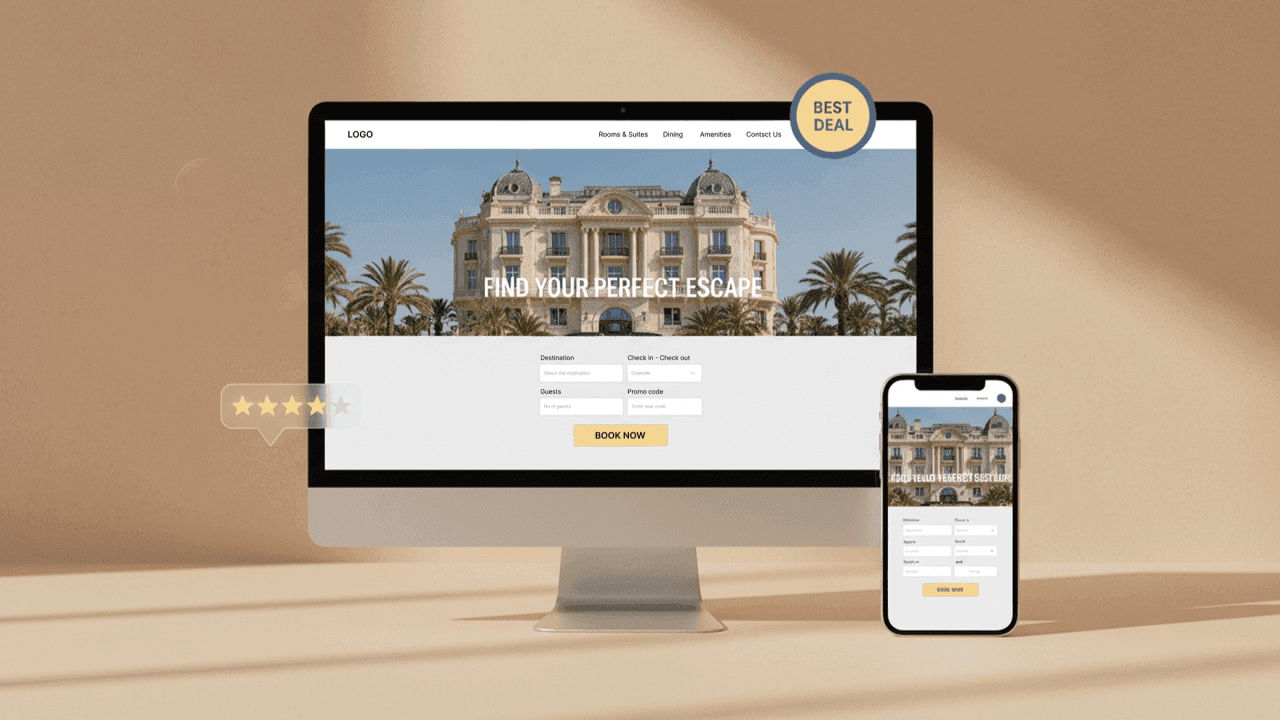
When I land on a hotel website, my eyes almost always go straight to the centre of the above-the-fold. If the visual is strong and there is a heading that catches my attention, I instinctively feel like scrolling to check whether this hotel is actually good. This could be a still image, an animation, a video, or a simple image slider.

In hospitality, if the vibe through visuals and the utility through location clarity, pricing cues, or a visible booking bar are not immediate, bounce rates spike.

Another behavior I consistently noticed is how users treat the above-the-fold as a quick check zone. Sometimes I am not ready to book. I just want to see if rooms are available on my desired dates or get a sense of pricing. If that utility is hidden or requires extra clicks, it feels like unnecessary effort.

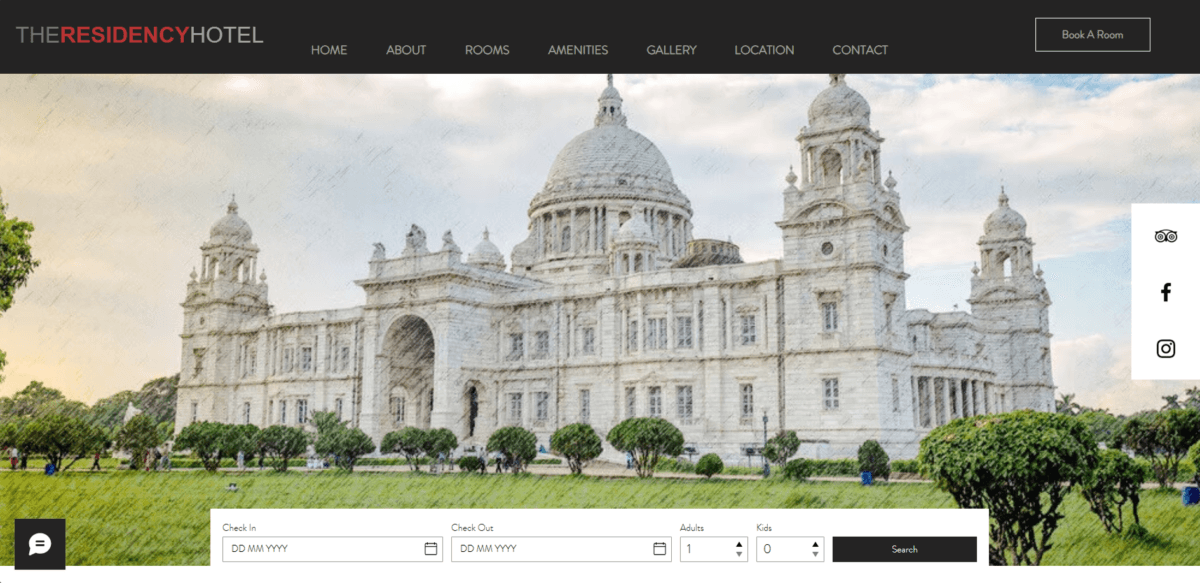
While analysing websites, I came across one homepage that clearly showed how things can go wrong above-the-fold.

Case study: what went wrong

Missing headline

When I landed on the page, the first thing I noticed was that the headline was missing entirely. There was no clear message telling me what kind of hotel this is or where it is located. As a visitor, I genuinely did not know whether this was a heritage stay, a business hotel, or a city reso

Confusing visuals

The visual made the confusion worse. The hero image showed a famous monument instead of the hotel itself. It sold the destination, not the stay. I could not imagine the rooms, the atmosphere, or what it would feel like to actually stay there.

Overloaded interface

Then came the interface. Navigation links, social media icons, a floating chat button, and a large booking bar were all present at the same time. Everything competed for attention. Nothing clearly guided my eyes toward the next step. There was no visual hierarchy.

This is where basic UX principles become very real. Miller’s Law tells us that the human brain can handle only around seven items at a time. When too many elements appear above-the-fold, users feel overwhelmed without knowing exactly why.

Lack of trust and clarity

I also noticed that there was no trust or reassurance built into the context. No visible location cue. No rating. No supporting line to orient the guest. The website asked me to interact before helping me feel confident.

This pattern showed up across several sites.

The power of ratings, location, and social proof

Ratings also play a huge role. When ratings are visible above-the-fold, there is an instant reaction. This place must be nice. Let me look more. Even a good looking website feels incomplete when social proof is missing.

In some websites, I had moments where I genuinely questioned whether the image shown was even the hotel. That alone break trust.

Location clarity is another small but powerful detail. If the exact location is visible upfront, I can quickly check distances on Google without wasting time trying to find where the hotel actually is.

Decision making and button overload

I also noticed how decision making slows down when too many actions are presented. Multiple buttons like book now, check availability, and view rooms compete with each other. Hick Hyman Law explains this clearly. The more choices we give users, the longer it takes for them to decide.

My own behavior is simple. I usually discover hotels on booking platforms first. Then I visit the hotel website to check whether it feels trustworthy and worth booking directly. If the above-the-fold gives me confidence, I scroll further. If it does not, I leave.

Key takeaways: designing above-the-fold

This is why above-the-fold should be simple, professional, and intentional. A clear heading. Visuals that represent the actual property. Limited navigation. One clear primary action. Balanced use of brand colors that do not overpower the experience.

The fold does not stop the scroll. It earns the scroll.

In most cases, users decide whether to trust a hotel within the first few seconds. When above-the-fold builds clarity and confidence, the rest of the website finally gets the chance to do its job.

How to Write a Room Description That Gets More Hotel Bookings

room description

When hotels think about room descriptions, many focus on sounding polished. They want the copy to feel warm, premium, and inviting. That part matters. But in real booking behaviour, clarity matters more.

After reviewing many hotel and resort websites, one issue comes up again and again: room descriptions often stop just before the information a guest actually needs to make a decision.

The copy may sound elegant, but it leaves out the basics. Guests are told a room is “spacious” without being told the size. They read “perfect for families” without knowing the maximum occupancy. They see “luxurious bedding” without knowing whether the room has one king bed, two twins, or something else entirely.

This is where many room descriptions fail. They create interest, but they do not remove doubt.

A good room description should help a guest answer a simple question: Is this the right room for me? If the answer is not clear within a few seconds, the booking journey becomes harder than it needs to be.

Agenda

This article explains how to write hotel room descriptions that help guests make faster booking decisions. It covers the most common mistakes hotels make, why vague copy hurts conversions, and what information guests actually look for before clicking “Book.” The article also breaks down the key details every room description should include, such as room size, bed type, occupancy, and standout features, while showing why brevity and specificity work better than decorative language.

Why Room Descriptions Matter More Than Most Hotels Think

A room page is not just a branding space. It is a decision page.

By the time a guest is reading a room description, they are usually comparing options. They may be deciding between room categories on the same property. They may be checking whether a room fits their family, their luggage, their sleep preferences, or their budget. They may also be comparing your hotel with three others open in nearby tabs.

At that moment, vague copy does not help. Specific copy does.

A strong room description reduces hesitation. It helps guests understand what they are paying for. It also sets expectations clearly, which is just as important after the booking as before it.

When room details are incomplete, guests may leave the website, call the hotel, or book somewhere else that explains things better. In some cases, unclear descriptions also create mismatched expectations, which can lead to complaints, poor reviews, or frustration at check-in.

The Most Common Problem: Writing That Sounds Nice but Says Very Little

Many room descriptions use attractive language, but not useful language.

Phrases such as “tastefully designed interiors,” “ultimate comfort,” “modern amenities,” and “perfect stay experience” are common across hospitality websites. The problem is not that these phrases are wrong. The problem is that they are too general to influence a decision.

Guests do not book because a room is described as “beautifully appointed.” They book because they can quickly see that it is a 320 sq ft room with one king bed, space for two adults and one child, a work desk, and a balcony with city views.

That level of detail gives them something concrete to assess. It replaces guesswork with confidence.

What Every Effective Room Description Should Include

If the goal is to help guests choose, every room description should cover a few essentials first.

1. Room Size

Size should never be left vague. Words like “compact,” “cozy,” or “spacious” mean different things to different people.

Give the actual room size in square feet or square metres. This immediately helps guests picture the room and compare categories.

For example, “250 sq ft” is far more useful than “comfortable and spacious.”

2. Bed Configuration

Guests need to know exactly what they are booking.

Do not say “comfortable bedding” when you can say “1 king bed” or “2 queen beds.” If a sofa bed, extra bed, or twin setup is available, mention that clearly too.

This detail is especially important for families, groups, business travellers, and couples with specific sleeping preferences.

3. Maximum Occupancy

One of the biggest gaps in room descriptions is occupancy. Many hotels avoid being too direct here, but this only creates confusion.

Be honest and exact. Say whether the room accommodates two adults, two adults and one child, or three guests total. If children stay free under a certain age, that can be mentioned separately in booking details, but the room description itself should still state the real maximum occupancy.

This helps prevent booking errors and saves time for both the guest and the property.

4. Two or Three Specific Selling Features

Once the essentials are clear, highlight the few features that genuinely make the room worth choosing.

This could include:

  • a private balcony
  • sea or mountain views
  • a separate sitting area
  • a bathtub
  • a work desk
  • direct pool access
  • floor-to-ceiling windows
  • a kitchenette

The key is to choose the details that are actually useful or desirable, not to list every standard amenity in the room.

Guests do not need a paragraph about “carefully curated interiors.” They need to know why this room is different from the next one.

Brevity Works Better Than Overwriting

One of the easiest mistakes in hospitality copywriting is trying to make the description feel luxurious by making it longer.

In reality, longer does not always mean better. Guests are not reading room descriptions like magazine features. They are scanning for confirmation.

The best room descriptions are usually short, structured, and specific. They give the guest what they need in plain language and stop before the copy becomes repetitive.

Brevity and specificity both serve the guest. Vague eloquence serves neither.

A short description that answers practical questions will usually outperform a longer one filled with generic praise.

What Guests Actually Want to Know Before Booking

Hotels sometimes write from the brand’s point of view instead of the guest’s point of view.

The brand wants to communicate elegance, comfort, and identity. The guest wants to know whether the room fits their needs.

That means the most effective descriptions are built around real booking questions:

  • How big is the room?
  • What kind of bed does it have?
  • How many people can stay here?
  • What makes this room better or different?
  • Does it have the feature I care about most?

When your room description answers these questions quickly, the page becomes more useful. And when the page becomes more useful, conversion improves.

A Simple Formula for Writing Better Room Descriptions

A practical room description can often follow a simple format:

Start with the room type and size. Then mention the bed setup and occupancy. Finish with two or three standout features.

That is often enough.

For example:

Deluxe King Room, 320 sq ft, with one king bed and space for up to two adults and one child. Features include a private balcony, city views, and a dedicated work desk.

This works because it is direct, complete, and easy to compare.

Before and After Example

Here is how a weak room description often looks:

Weak Example

Step into a world of refined comfort in our beautifully designed Deluxe Room, where elegant interiors and modern conveniences create the perfect setting for a relaxing stay.

This sounds pleasant, but it does not answer a single important booking question.

Now compare it with this version:

Better Example

Our Deluxe Room offers 320 sq ft of space with one king bed and accommodation for up to two adults and one child. Ideal for both business and leisure stays, it includes a private balcony, city views, and a dedicated work desk.

This version gives the guest useful information immediately. It still sounds polished, but it earns attention through clarity.

Best Practices Hotels Should Follow

A room description should not try to do everything. It should do the important things well.

Hotels should aim to make every room listing:

  • easy to scan
  • factually complete
  • honest about occupancy
  • clear about bed type
  • selective about standout features

The goal is not to impress with language alone. The goal is to make choosing easier.

That is what moves a guest closer to booking.

Final Thought

A guest should not have to guess whether a room is right for them.

If your room descriptions leave out room size, bed configuration, or occupancy, they are creating friction in one of the most important parts of the booking journey. The fix is simple: state the facts clearly, highlight the features that matter, and stop before the copy drifts into vague filler.

The best room descriptions are not the most poetic. They are the most useful.

3 Website Misconceptions Hotel Owners Revealed

hotel website misconceptions

Excerpt – Most hotel websites fail because they explain instead of reassure. Guests come to decide, not explore. When websites build trust quickly, direct bookings rise and OTA dependence reduces.

TL;DR – What Hotel Owners Learn About Websites Only After Real Experience

Most hotel owners see their website as a requirement, not a revenue driver. Insights from Sourabh Baheti of Kasturi Orchid Hotel and Krishnendu B Parui of Gram Bangla Retreat reveal why this thinking fails. Guests do not visit websites to explore stories; they come to confirm trust, pricing comfort, and booking safety. When websites are outdated or treated as one-time projects, hesitation grows and guests return to OTAs.

Hotels that treat their website as a living business asset see a clear shift better guest quality, higher confidence, and stronger direct bookings without increasing marketing spend.

Introduction

For many hotel owners, a website starts as a necessity rather than a strategy. Something that needs to exist, not something expected to perform.

Hotel owners do not underestimate their property, but they often misunderstand the role their website plays in the booking decision.

The most valuable insights on this topic do not come from theory. They come from hotel owners who have seen the impact first-hand.

Conversations with Sourabh Baheti, Director of Kasturi Orchid Hotel, and Krishnendu B Parui, Founder of Gram Bangla Retreat, reveal three common misconceptions that many hoteliers hold until real operational experience changes their thinking.

Misconception 1: A Website Is a Cost, Not an Asset

This belief is deeply rooted across the hospitality industry.

For many independent hotels, the website is treated as a one-time expense. It is built, paid for, and then forgotten, while OTAs are expected to drive most of the bookings.

At Kasturi Orchid Hotel, this was also the initial mindset.

The website existed, but it was not actively working as part of the booking journey. Once the team started using the website deliberately with clear room details, updated images, and a simple direct enquiry flow guest behaviour changed.

Guests who discovered the hotel through OTAs began visiting the website before booking.

That shift is critical. When guests voluntarily check a hotel’s website, they are no longer browsing. They are validating trust, comparing confidence, and moving closer to a decision.

At that point, the website stops being a cost. It becomes a revenue-influencing asset.

Misconception 2: Once the Website Is Built, the Job Is Done

Many hotel websites quietly lose trust not because of poor design, but because they fall out of sync with reality.

Photos remain outdated. Facilities evolve on property, but not online. Policies change, yet the website does not reflect them. This gap creates hesitation.

As Sourabh Baheti explains, when the website lags behind the actual on-ground experience, guests begin to doubt what they are seeing. That doubt rarely results in a complaint. Instead, it results in delay, cross-checking, or a return to OTAs.

When the website accurately mirrors the real guest experience:

  • Trust improves
  • Enquiries become smoother
  • Guests arrive better informed and more confident

A hotel website is not a static deliverable. It is a living representation of the property. When it stops reflecting reality, it stops converting.

Misconception 3: OTA Listings Are Enough, a Strong Website Is Optional

OTAs bring visibility, and social media builds recall. Both play an important role. However, neither gives hotels full control over how guests perceive or decide.

According to Krishnendu B Parui, many hotel owners initially believe that a beautiful website will automatically drive bookings, or that OTA listings alone are sufficient. In practice, neither assumption holds true.

Hotels eventually notice a clear difference in guest quality.

Guests who come through the website:

  • Ask fewer basic questions
  • Understand the property better
  • Trust pricing more easily
  • Are easier to convert

This happens because the website allows the hotel to frame its own narrative instead of competing within a standardised OTA template.

OTAs simplify decisions for guests, but they limit control for hotels. A strong website restores that control and supports long-term business stability.

Why Most Hotel Websites Still Fail to Convert?

Across repeated website audits and session behaviour analysis, one truth stands out: guests do not explore hotel websites. They evaluate them.

They spend most of their time at the top of the page, quickly checking price comfort, visual honesty, reviews, and booking clarity. They are not reading brand stories or philosophy at this stage. They are deciding whether it feels safe to book directly.

When websites overload guests with information without guidance, confusion replaces confidence. Once confidence drops, guests leave.

OTAs win not because they look better, but because they reduce decision effort.

The Real Shift Hotel Owners Must Make

The core issue is not traffic, SEO, or marketing spend. It is mindset.

As long as a website is treated as a brochure, a design showcase, or a one-time project, it will continue to lose bookings to platforms that are designed purely for decision-making.

A hotel website has one primary role: to make booking directly feel like the safest and smartest option.

When hotel owners begin to see their website as a business asset rather than a technical requirement, everything changes. Content becomes clearer. Design supports action. Trust signals appear earlier. Direct bookings improve without increasing advertising spend.

Final Words

A hotel website is not built to explain everything. It is built to help guests decide.

Guests do not want more information. They want reassurance.
They do not want to explore. They want clarity.

The moment a website prioritises guest confidence over hotel explanation, direct bookings grow naturally. Until then, OTAs will continue to dominate not because they are better, but because they make decisions easier.

A strong hotel website should do the same.