
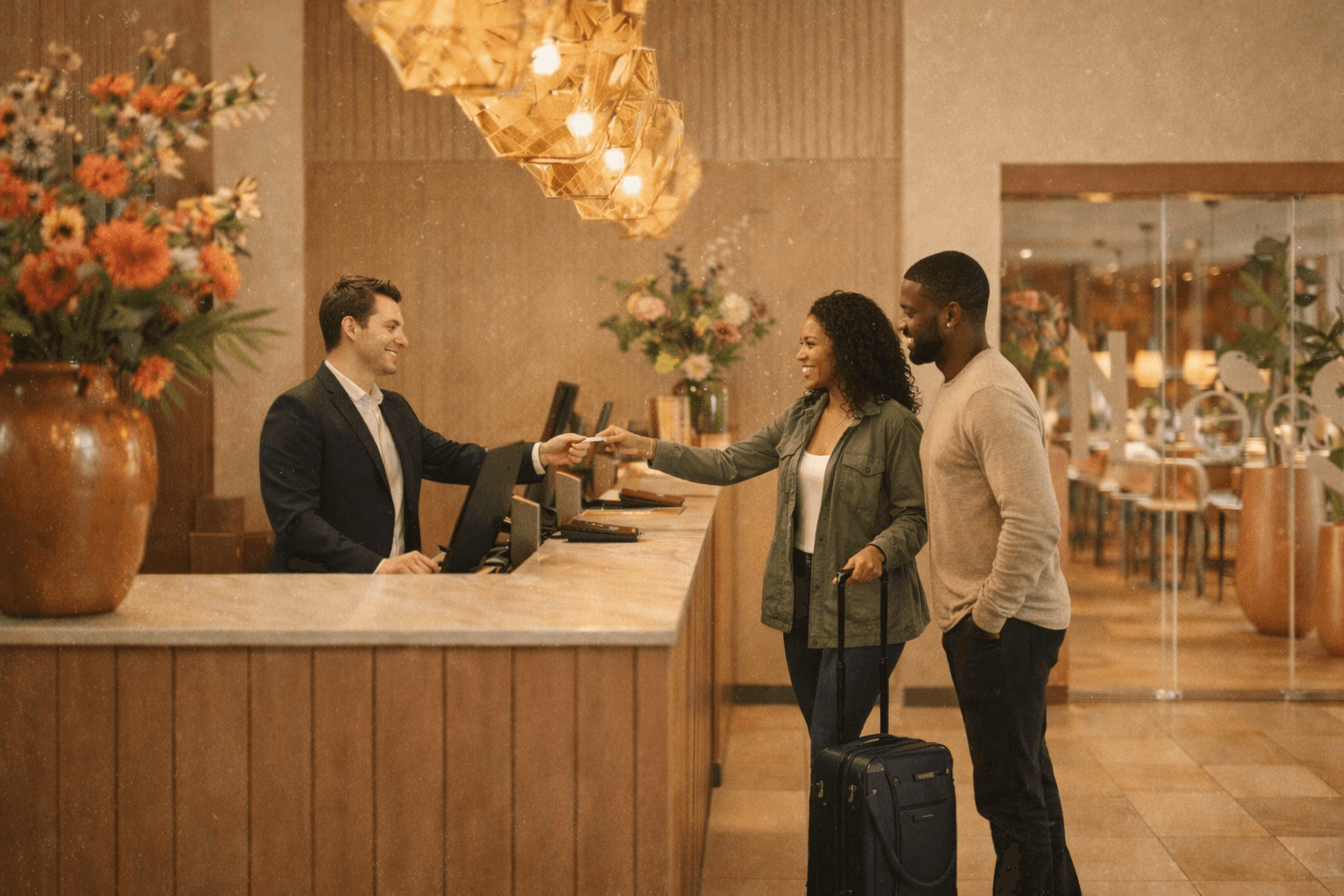
Excerpt – Online Travel Agencies do not take bookings away; weak hotel websites hand them over through confusion, hesitation, and poor user experience. When clarity, trust, and ease of booking are missing, guests simply move to an OTA that feels faster and safer. Strengthening the hotel website closes this gap and reduces OTA dependence without competing on scale.
TL;DR: OTAs Win Where Hotel Websites Hesitate
OTAs do not steal hotel bookings; they absorb bookings that weak hotel websites fail to convert.
Guests decide within seconds. If clarity, trust, and booking ease are missing, they switch to an OTA. Slow loads, poor mobile UX, hidden pricing, and weak trust signals are the real drivers of OTA dependency.
Commissions are a symptom, not the cause. Hotels that focus on conversion, trust, and usability reduce OTA reliance naturally and regain control over guest relationships.
Introduction
Most hotel owners think OTAs are stealing their bookings. But the truth is simpler. OTAs do not take bookings away. Hotel websites give them away.
When a guest visits a hotel website and feels confused, slow loading, or unsure, they do not stop booking. They simply leave and open an OTA. OTAs are ready at that exact moment. They load faster, feel safer, and make booking feel easy.
This happens at every price level and in every market. OTAs are not winning because they are aggressive. They are winning because hotel websites hesitate.
This article explains how weak hotel websites push guests toward OTAs, and how those lost bookings can be prevented.
The First 5 Seconds Decide the Booking
When a guest lands on a hotel website, the decision-making window is extremely short. In my experience, most guests decide whether to stay or leave within the first five seconds.
During those seconds, the guest is subconsciously asking:
- Where is this hotel located?
- Is this hotel reliable and safe?
- Can I clearly see how to book?
Most hotel websites fail to answer all three questions quickly. Important information is scattered. Booking calls-to-action are visually weak. Room and pricing clarity is delayed. This hesitation creates doubt, and doubt sends the guest elsewhere.
Online Travel Agencies are designed specifically to eliminate this doubt.
Confusion is the Gateway to OTAs
OTAs rarely attract guests first. Hotels do.
A guest typically discovers a hotel through Google, social media, or word of mouth. They visit the hotel website expecting reassurance. When the website does not guide them confidently toward booking, the guest does what modern users are trained to do: open a second tab.
That second tab is almost always an Online Travel Agency.
At that moment, the OTA does not need to convince the guest. The hotel website has already done the damage.
Why OTAs feel easier than Hotel Websites?
After reviewing hundreds of booking journeys, the contrast is consistent.
Online Travel Agencies show:
- Clear price comparisons
- Visible guest reviews beside rooms
- Straightforward cancellation policies
- Fast-loading, mobile-first interfaces
Hotel websites, on the other hand, often prioritise aesthetics over usability. Large visuals delay page loads. Critical information is placed too low on the page. Booking engines feel disconnected from the main website experience.
OTAs convert not because they are better brands, but because they reduce friction at every step.
Design-Heavy Websites help OTAs win
Many hotel owners invest heavily in visual design, assuming premium aesthetics lead to premium bookings. In practice, design without conversion strategy weakens performance.
A website that looks impressive but does not guide decision-making becomes passive. Guests admire it, then leave. OTAs, however, are actively designed to push users forward.
This mismatch trains guests to associate Online Travel Agency with clarity and hotel websites with uncertainty.
Missing Trust Signals Strengthen OTAs
Trust is the most underestimated factor in hotel website performance.
OTAs display trust immediately. Review scores, review counts, and social proof are unavoidable. On many hotel websites, these elements are hidden or delayed.
When trust is not visible early, guests look for reassurance elsewhere. OTAs position themselves as neutral, reliable validators, even though they are intermediaries.
From years of observation, I can say this clearly: OTAs benefit more from weak trust signals than from aggressive marketing.
Mobile Weakness Is an Open Invitation
Mobile traffic now dominates hotel discovery, yet many hotel websites still function as scaled-down desktop experiences.
Small buttons, slow booking engines, and unclear room layouts make mobile booking difficult. OTAs, by contrast, are built mobile-first and reinforced through highly optimised apps.
When a guest struggles on a mobile hotel website, the switch to an OTA is almost automatic. Convenience outweighs loyalty.
OTAs do not Steal Bookings. They Absorb Them.
This is an important distinction.
OTAs do not take bookings that a strong hotel website would have converted. They absorb bookings that were already at risk.
Every weak website interaction increases OTA dependency. Over time, hotels begin to believe commissions are unavoidable. In reality, commissions are a symptom, not the cause.
The Long-Term Cost of Website Weakness
The real cost of OTA dependency is not commission percentage. It is loss of control.
OTAs own:
- Guest data
- Repeat booking pathways
- Pricing perception
- Brand positioning
A weak website slowly hands over ownership of the guest relationship. This makes long-term growth increasingly expensive and unpredictable.
Final Words
Hotels that invest in strong, conversion-focused websites do not fight OTAs emotionally. They simply rely on them less.
OTAs thrive where clarity is missing.
Strong hotel websites remove that gap.
The solution is not to compete with OTAs on scale, but to outperform them where it matters most: confidence, trust, and ease of booking.