
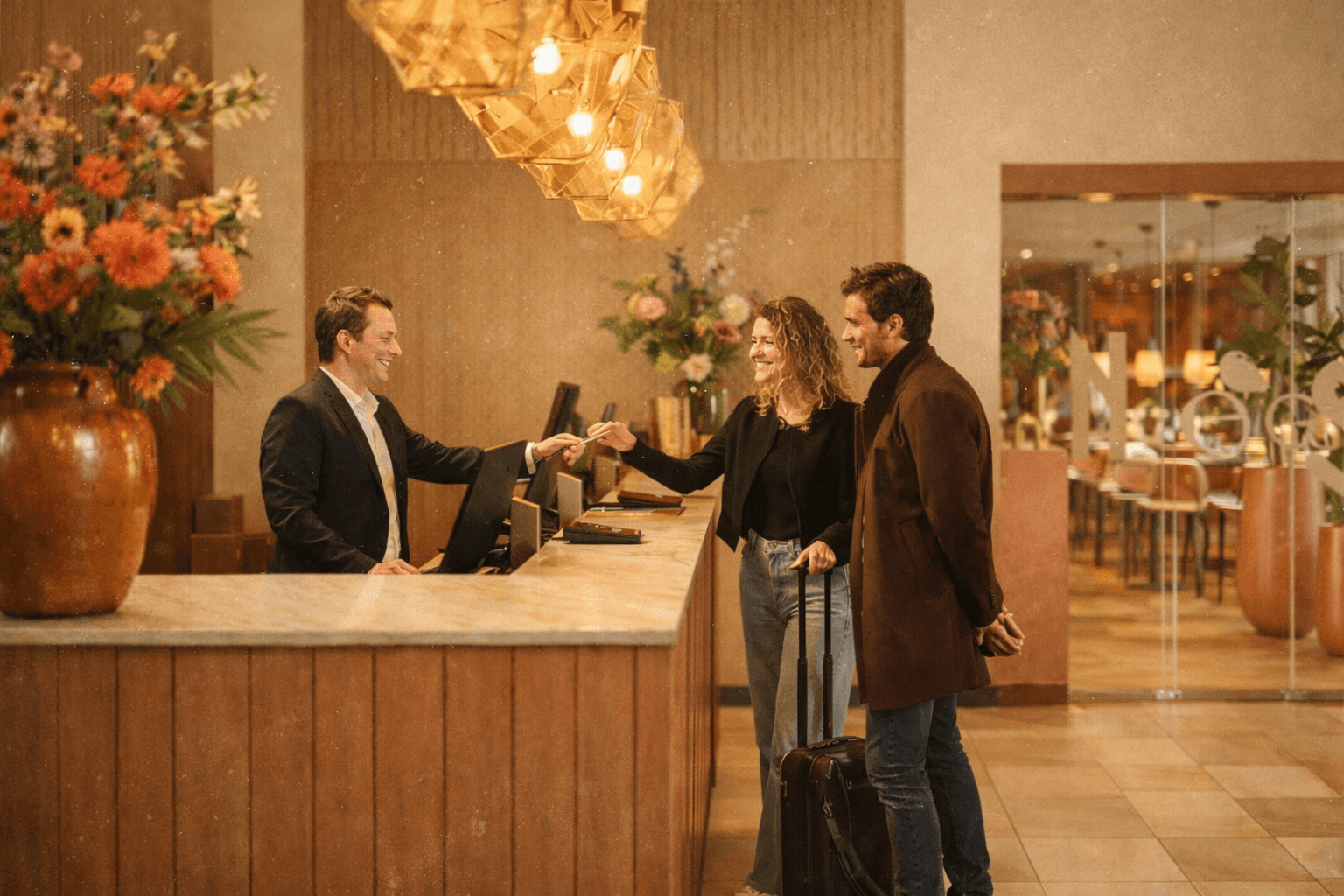
Today’s hotel guests do not browse websites patiently or read long descriptions. They arrive with pre-formed expectations and make fast, emotional decisions based on clarity, trust, speed, and ease of booking. A hotel website is no longer a discovery tool; it is a validation tool. When it fails to reassure within seconds, guests do not abandon the booking they simply complete it on an OTA that feels safer and easier.
TL;DR: Guests Book Fast, Emotional, and Risk Arises
Guests book hotels quickly, emotionally, and primarily on mobile.
They judge websites within five seconds based on location clarity, price comfort, trust, and ease of booking.
Confusion, slow speed, weak mobile UX, and delayed trust signals push guests to OTAs. OTAs win because they reduce risk and friction, not because they are cheaper.
Hotel websites must act as decision tools, not brochures, to convert direct bookings.
Introduction
For years, hotel owners have believed a simple truth: if the property is good, the rooms are clean, and the price is competitive, bookings will follow. This belief shaped how most hotel websites were built as digital brochures meant to showcase the hotel, not convert the guest.
That belief no longer holds.
Today’s guests book hotels the way they used to. They do not patiently explore websites. They do not read long descriptions. And they do not “decide” after seeing everything. They judge fast, emotionally, and comparatively.
Understanding how guests actually book hotels today is not a marketing exercise. It is a survival requirement for any hotel that wants to reduce OTA dependency and increase direct bookings.
Where the Guest Journey Really Begins?
The modern guest journey does not begin on your website.
It begins earlier, on Google search results, Google Maps, Instagram, WhatsApp recommendations, or an OTA listing. By the time a guest reaches your website, they already carry expectations shaped elsewhere: price range, location clarity, perceived quality, and trust.
Your website is not where discovery happens.
It is where validation happens.
This single shift in mindset explains why so many “beautiful” hotel websites fail to convert. They assume the guest is starting fresh. In reality, the guest is arriving with doubts that need to be resolved quickly.
Mobile Is the Default, Not an Option
As per hotelbenchmarking.com, over 50-60% percent of hotel website visits today happen on mobile devices. Yet most hotel websites are still designed as desktop-first experiences squeezed into smaller screens.
On mobile, guests book hotels differently:
- They scan, not read
- They scroll fast
- They abandon faster
Every extra tap, unclear button, slow-loading image, or hidden booking action increases friction. Mobile guests do not tolerate confusion. They simply leave.
A hotel website that is “mobile-friendly” is not enough.
It must be mobile-native, built around thumb movement, short attention spans, and instant clarity.
The First Five Seconds That Decide the Booking
Guests decide whether to stay or leave your website within the first five seconds.
In that short window, they are subconsciously asking:
- Is this hotel in the right location?
- Is it within my price expectation?
- Can I trust this property?
- Can I book easily?
If even one of these answers is unclear, the guest does not wait. They exit and open an OTA, not because OTAs are better, but because OTAs answer these questions faster.
This is why clarity beats creativity every time in hotel website design.
How Guests Emotionally Choose Hotels?
Hotel booking is not a logical decision. It is an emotional one justified with logic later.
Guests choose hotels based on how the website makes them feel:
- Safe or uncertain
- Confident or hesitant
- Welcomed or confused
Real photos outperform polished stock images because they reduce uncertainty. Simple room comparisons outperform long descriptions because they reduce mental effort. Clear cancellation policies outperform hidden terms because they reduce anxiety.
Guests do not want to think. They want reassurance.
Why Guests Compare Even When Prices Match?
Many hotel owners believe that if prices are the same on their website and OTAs, guests should book directly.
That is not how the guest thinks.
Guests compare even when prices match because they are not comparing price alone. They are comparing:
- Ease of booking
- Trust signals
- Familiarity
- Perceived risk
OTAs feel familiar. Hotel websites feel unknown unless trust is established immediately. When doubt exists, guests choose the platform that feels safer, not cheaper.
Speed as a Silent Trust Signal
Website speed is not a technical metric. It is a trust signal.
Guests subconsciously associate slow websites with:
- Poor service
- Outdated management
- Risky bookings
If your website takes more than three seconds to load, booking intent drops sharply. Guests do not think “this site is slow.” They think “something feels off.”
OTAs win partly because they load faster, cleaner, and more predictably. Speed communicates professionalism without saying a word.
Confusion Is the Fastest Way to Lose a Booking
Confusion kills bookings faster than price.
Common sources of confusion include:
- Too many room types without explanation
- Hidden booking buttons
- Inconsistent pricing
- Overloaded homepages
- Too much text and too little direction
Every moment of confusion pushes the guest toward comparison. And comparison almost always ends on an OTA.
When Trust Appears too Late
Many hotel websites place trust elements reviews, awards, testimonials at the bottom of the page.
By then, the guest is already gone.
Trust must appear early, not eventually.
Within the first scroll, guests should see:
- Guest reviews or ratings
- Clear policies
- Social proof
- Professional photography
If trust is delayed, bookings disappear.
The Exact Moment Guests Abandon your Website
Guests abandon hotel websites at predictable moments:
- After landing, when clarity is missing
- During room selection, when options overwhelm
- At booking, when forms feel complicated
- When policies are unclear
Abandonment is rarely emotional frustration. It is quite doubtful.
Guests do not complain. They simply leave.
The Modern Hotel Booking Abandonment Funnel
The modern funnel looks like this:
- Visitors arrive with interest
- Confusion appears
- Doubt increases
- Delay begins
- Comparison starts
- Booking happens on an OTA
Same guest. Different platforms.
OTAs do not steal bookings. Hotel websites leak them.
Why OTAs Win Without Stealing?
OTAs win because they are designed for decision-making, not branding.
They offer:
- Familiar interfaces
- Fast loading
- Clear comparisons
- Early trust signals
- Predictable booking flows
Most hotel websites are designed to impress owners, not convert guests.
This is not an OTA problem.
It is a website experience problem.
What This Behaviour Means for Hotel Owners
Hotel owners must stop asking:
“Why do guests book on OTAs?”
And start asking:
“Why does my website fail to close the booking?”
The answer is rarely price.
It is almost always an experience.
Your website is no longer a brochure.
I am a salesperson.
If it hesitates, confuses, or delays, the sale is lost.
Seeing Your Website Through the Guest’s Eyes
The most powerful shift a hotel owner can make is this:
Stop seeing your website as your property online.
Start seeing it as the guest’s decision tool.
Ask yourself:
- Can a first-time guest understand my value in five seconds?
- Is booking obvious, easy, and reassuring?
- Does my website reduce anxiety or create it?
When you see your website through the guest’s eyes, conversion becomes inevitable.
Because today, guests are not looking for the best hotel.
They are looking for the least risky decision.
And the websites that win are the ones that make that decision feel effortless.