
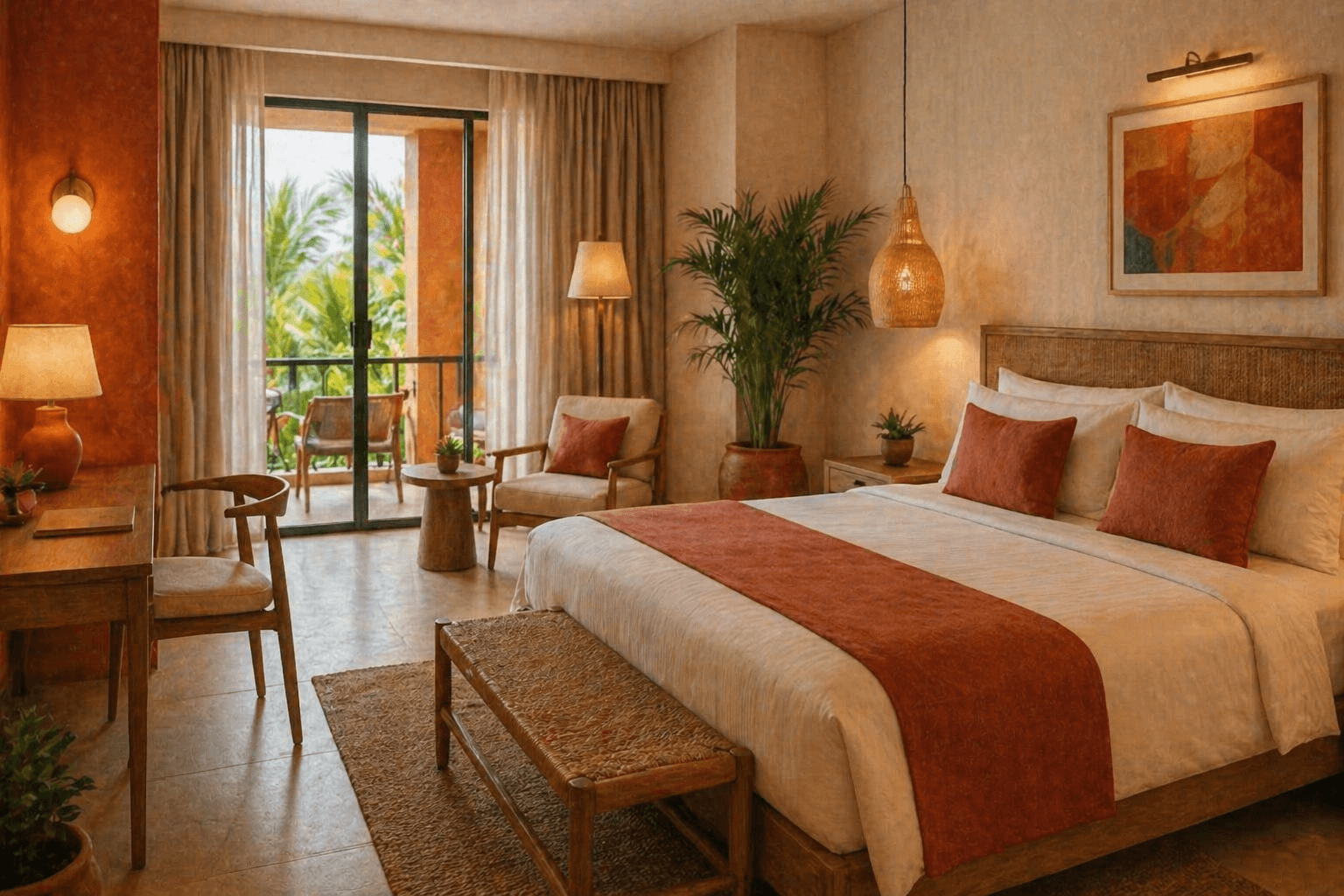
When hotels think about room descriptions, many focus on sounding polished. They want the copy to feel warm, premium, and inviting. That part matters. But in real booking behaviour, clarity matters more.
After reviewing many hotel and resort websites, one issue comes up again and again: room descriptions often stop just before the information a guest actually needs to make a decision.
The copy may sound elegant, but it leaves out the basics. Guests are told a room is “spacious” without being told the size. They read “perfect for families” without knowing the maximum occupancy. They see “luxurious bedding” without knowing whether the room has one king bed, two twins, or something else entirely.
This is where many room descriptions fail. They create interest, but they do not remove doubt.
A good room description should help a guest answer a simple question: Is this the right room for me? If the answer is not clear within a few seconds, the booking journey becomes harder than it needs to be.
Agenda
This article explains how to write hotel room descriptions that help guests make faster booking decisions. It covers the most common mistakes hotels make, why vague copy hurts conversions, and what information guests actually look for before clicking “Book.” The article also breaks down the key details every room description should include, such as room size, bed type, occupancy, and standout features, while showing why brevity and specificity work better than decorative language.
Why Room Descriptions Matter More Than Most Hotels Think
A room page is not just a branding space. It is a decision page.
By the time a guest is reading a room description, they are usually comparing options. They may be deciding between room categories on the same property. They may be checking whether a room fits their family, their luggage, their sleep preferences, or their budget. They may also be comparing your hotel with three others open in nearby tabs.
At that moment, vague copy does not help. Specific copy does.
A strong room description reduces hesitation. It helps guests understand what they are paying for. It also sets expectations clearly, which is just as important after the booking as before it.
When room details are incomplete, guests may leave the website, call the hotel, or book somewhere else that explains things better. In some cases, unclear descriptions also create mismatched expectations, which can lead to complaints, poor reviews, or frustration at check-in.
The Most Common Problem: Writing That Sounds Nice but Says Very Little
Many room descriptions use attractive language, but not useful language.
Phrases such as “tastefully designed interiors,” “ultimate comfort,” “modern amenities,” and “perfect stay experience” are common across hospitality websites. The problem is not that these phrases are wrong. The problem is that they are too general to influence a decision.
Guests do not book because a room is described as “beautifully appointed.” They book because they can quickly see that it is a 320 sq ft room with one king bed, space for two adults and one child, a work desk, and a balcony with city views.
That level of detail gives them something concrete to assess. It replaces guesswork with confidence.
What Every Effective Room Description Should Include
If the goal is to help guests choose, every room description should cover a few essentials first.
1. Room Size
Size should never be left vague. Words like “compact,” “cozy,” or “spacious” mean different things to different people.
Give the actual room size in square feet or square metres. This immediately helps guests picture the room and compare categories.
For example, “250 sq ft” is far more useful than “comfortable and spacious.”
2. Bed Configuration
Guests need to know exactly what they are booking.
Do not say “comfortable bedding” when you can say “1 king bed” or “2 queen beds.” If a sofa bed, extra bed, or twin setup is available, mention that clearly too.
This detail is especially important for families, groups, business travellers, and couples with specific sleeping preferences.
3. Maximum Occupancy
One of the biggest gaps in room descriptions is occupancy. Many hotels avoid being too direct here, but this only creates confusion.
Be honest and exact. Say whether the room accommodates two adults, two adults and one child, or three guests total. If children stay free under a certain age, that can be mentioned separately in booking details, but the room description itself should still state the real maximum occupancy.
This helps prevent booking errors and saves time for both the guest and the property.
4. Two or Three Specific Selling Features
Once the essentials are clear, highlight the few features that genuinely make the room worth choosing.
This could include:
- a private balcony
- sea or mountain views
- a separate sitting area
- a bathtub
- a work desk
- direct pool access
- floor-to-ceiling windows
- a kitchenette
The key is to choose the details that are actually useful or desirable, not to list every standard amenity in the room.
Guests do not need a paragraph about “carefully curated interiors.” They need to know why this room is different from the next one.
Brevity Works Better Than Overwriting
One of the easiest mistakes in hospitality copywriting is trying to make the description feel luxurious by making it longer.
In reality, longer does not always mean better. Guests are not reading room descriptions like magazine features. They are scanning for confirmation.
The best room descriptions are usually short, structured, and specific. They give the guest what they need in plain language and stop before the copy becomes repetitive.
Brevity and specificity both serve the guest. Vague eloquence serves neither.
A short description that answers practical questions will usually outperform a longer one filled with generic praise.
What Guests Actually Want to Know Before Booking
Hotels sometimes write from the brand’s point of view instead of the guest’s point of view.
The brand wants to communicate elegance, comfort, and identity. The guest wants to know whether the room fits their needs.
That means the most effective descriptions are built around real booking questions:
- How big is the room?
- What kind of bed does it have?
- How many people can stay here?
- What makes this room better or different?
- Does it have the feature I care about most?
When your room description answers these questions quickly, the page becomes more useful. And when the page becomes more useful, conversion improves.
A Simple Formula for Writing Better Room Descriptions
A practical room description can often follow a simple format:
Start with the room type and size. Then mention the bed setup and occupancy. Finish with two or three standout features.
That is often enough.
For example:
Deluxe King Room, 320 sq ft, with one king bed and space for up to two adults and one child. Features include a private balcony, city views, and a dedicated work desk.
This works because it is direct, complete, and easy to compare.
Before and After Example
Here is how a weak room description often looks:
Weak Example
Step into a world of refined comfort in our beautifully designed Deluxe Room, where elegant interiors and modern conveniences create the perfect setting for a relaxing stay.
This sounds pleasant, but it does not answer a single important booking question.
Now compare it with this version:
Better Example
Our Deluxe Room offers 320 sq ft of space with one king bed and accommodation for up to two adults and one child. Ideal for both business and leisure stays, it includes a private balcony, city views, and a dedicated work desk.
This version gives the guest useful information immediately. It still sounds polished, but it earns attention through clarity.
Best Practices Hotels Should Follow
A room description should not try to do everything. It should do the important things well.
Hotels should aim to make every room listing:
- easy to scan
- factually complete
- honest about occupancy
- clear about bed type
- selective about standout features
The goal is not to impress with language alone. The goal is to make choosing easier.
That is what moves a guest closer to booking.
Final Thought
A guest should not have to guess whether a room is right for them.
If your room descriptions leave out room size, bed configuration, or occupancy, they are creating friction in one of the most important parts of the booking journey. The fix is simple: state the facts clearly, highlight the features that matter, and stop before the copy drifts into vague filler.
The best room descriptions are not the most poetic. They are the most useful.